
September 20 – 26, 2026

Every parent and caregiver wants their child to have a winning future, and every champion starts with the right foundation. Safety starts with the right seat used correctly during every trip, every ride. Using the right car seat, booster seat or seat belt is your child’s best defense. Building the habit of buckling up every ride, every time, is a championship move that protects children during every mile of their journey. Choosing the right seat, and using it correctly, is one of the most effective ways to keep children safe.
Visit the Child Passenger Safety Week page for more information and to access the CPS Week planner.
Don’t sit this one out — make safety part of your starting lineup.
Planning an Event for Child Passenger Safety Week?
Register Your event Here

Child Passenger Safety Week provides the opportunity to educate parents and caregivers on correct car seat, booster seat, and seat belt choices to keep the entire family safe, because the consequences of a crash can be devastating.
Most parents and caregivers believe they know how to correctly install their car seats. A National Highway Traffic Safety study found that 46% installed their child’s car seat incorrectly. Child Passenger Safety Week is the time to check that children are as safe as possible when they are riding in a vehicle.
- Parents and caregivers can model safety for their children. Research shows there is a strong correlation between caregivers who buckle up and their child passengers’ seat belt use. In 2024, based on known restraint use:
- 71% of children were restrained when the driver was buckled.
- 35% of children were restrained when the driver was not buckled.
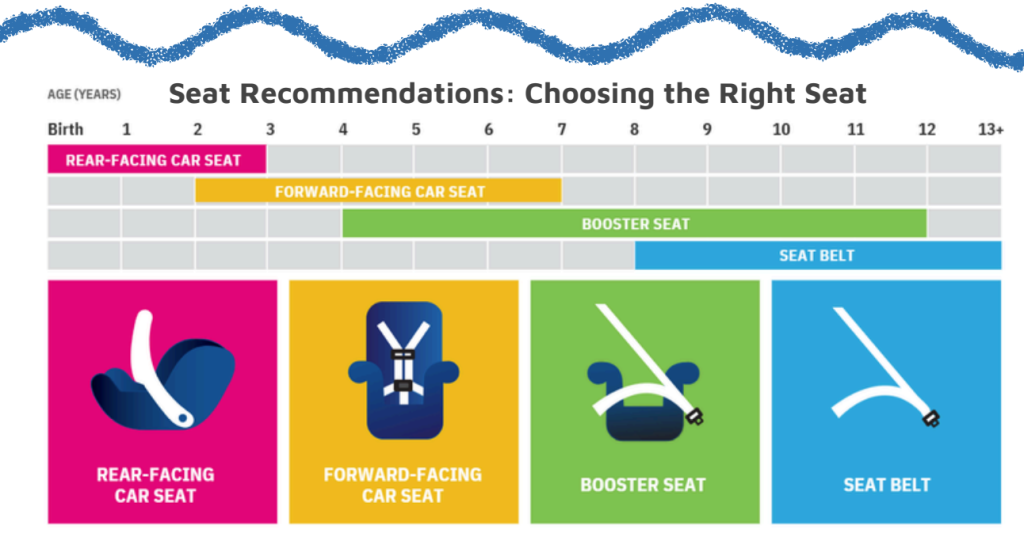
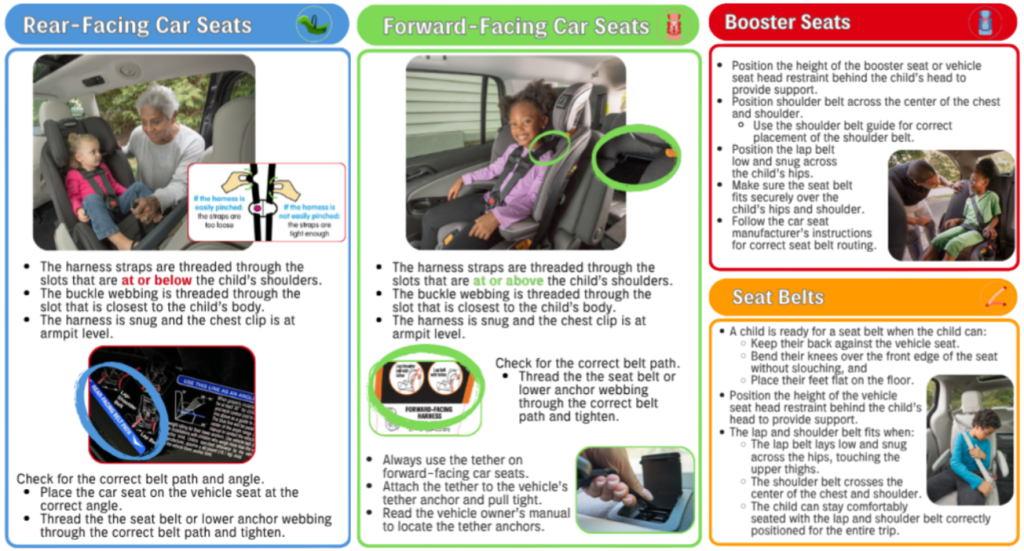
Best Practice recommendations to safely transport children in vehicles.
- Keep children rear-facing as long as possible, up to the maximum height and/or weight allowed by the manufacturer of the child’s car seat.
- Once a child outgrows a rear-facing car seat, the child is ready to travel in a forward-facing car seat with a harness. When installing a car seat forward-facing, use the tether, whenever possible.
- After a child outgrows the forward-facing car seat, the child should be buckled in a belt-positioning booster seat until the vehicle seat belt fits the child correctly.
- Children might ask to use the seat belt instead of a booster seat because it makes them feel older to ride without it, but the truth is, their safety is what matters most.
- Once your child is ready to use a seat belt, ensure that it fits correctly.
- Remember that the safest place for all children under the age of 13 is buckled up in the back seat.
Pennsylvania’s Occupant Protection Law for Children
- All children from birth to age 4 must be secured in a car seat anywhere in the vehicle.
- Children younger than age 2 must be secured rear-facing, until they outgrow the maximum weight and height of the car seat.
- All children 4 years of age and older, but less than 8 years, must be secured in a seat belt and an appropriate booster seat anywhere in the vehicle.
- All children 8 years of age and older, but less than 18 years of age, must be secured in a seat belt system anywhere in the vehicle.
- All drivers are responsible for securing children in the appropriate car seat, booster seat, or seat belt.
For more information about the correct selection, installation, and use of a car seat or to request materials visit www.pakidstravelsafe.org or call 1-800 CAR BELT.